
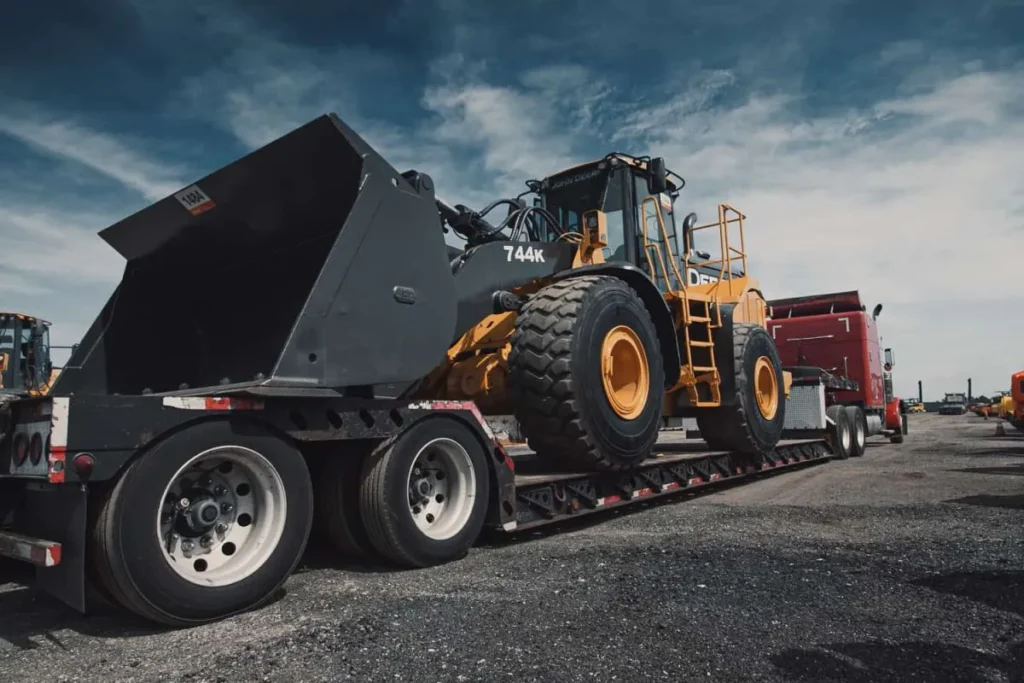
Moving heavy equipment is not like shipping standard freight. One miscalculation — in weight, dimensions, or documentation — can delay your shipment, trigger fines, or cause serious damage in transit.
Whether you’re moving construction machinery, industrial equipment, or agricultural vehicles, the stakes are high. Here’s what you need to know before your next heavy haul moves.
Standard carriers cannot handle most heavy equipment moves. Over-dimensional cargo transport and overweight cargo shipping require permits, route surveys, and equipment most general freight providers don’t carry.
A single oversized load can require:
Permit rules and compliance requirements vary by jurisdiction, and in the U.S. are regulated through federal and state transportation authorities such as the FMCSA oversize/overweight framework:
FMCSA Oversize and Overweight Permits Information
Miss any one of these and your shipment stops. Sometimes permanently, until compliance is met.
Working with an experienced international freight forwarder who understands both domestic and cross-border requirements saves time and prevents costly delays before they happen.
This sounds obvious. It isn’t.
Many shippers provide manufacturer specs rather than actual shipping dimensions. Those two numbers are not the same. Attachments, rigging points, and transport modifications all add to the physical footprint.
Before booking any move, measure:
Inaccurate measurements mean wrong permits, wrong equipment, and potentially illegal loads on public roads. Get it right before anything else.
Not every heavy load ships the same way. The equipment underneath your cargo matters as much as the cargo itself.
Flatbed trucking services work well for equipment that loads from the side and doesn’t exceed standard height restrictions.
Step-deck and lowboy trailers handle taller equipment that won’t clear overpasses on a standard flatbed.
Heavy haul trucking with multi-axle trailers is required for extreme weights that exceed standard legal limits.
For international moves, breakbulk shipping and heavy lift ocean freight are often the right solution when equipment is too large for standard containers. Your freight partner should assess each move individually, not default to the cheapest available option.
Domestic moves are complex. International moves add another layer entirely.
When shipping heavy equipment across borders, you’ll need:
Working with a customs brokerage USA partner who understands machinery transport services is critical here. Errors in classification or valuation can hold your equipment in customs for weeks.
For Gulf Coast shippers, New Orleans freight forwarder and Houston freight forwarding partners often specialize in project cargo forwarding and have established relationships with the port authorities who process these shipments regularly.
Improper securement is one of the most common — and preventable — causes of heavy equipment damage.
Equipment should be:
For ocean moves, additional blocking and bracing standards apply. Breakbulk ocean transport requires specialized stevedores who understand how to position and secure non-containerized cargo on vessel. This is not a DIY process.
Even experienced shippers make these mistakes:
Booking too late. Specialized equipment transport requires advance planning. Permit processing alone can take several days in some states. Book early.
Underestimating transit time. Over-dimensional domestic freight moves slower than standard loads. Reduced speed limits, restricted travel hours, and mandatory inspections all extend delivery windows.
Skipping route surveys. Low bridges, weight-restricted roads, and construction zones can block your planned route. A proper route survey catches these problems before the truck is loaded.
Ignoring insurance gaps. Standard cargo insurance often excludes or limits coverage for heavy equipment. Confirm your coverage before the move, not after a claim.
Choosing on price alone. Industrial project logistics requires experience, not just capacity. The cheapest provider rarely has the permits, equipment, and expertise to execute without problems.
Heavy equipment shipping rewards preparation and punishes shortcuts.
BMI Shipping brings decades of experience in specialized equipment shipping, over-dimensional cargo transport, and project cargo forwarding across domestic and international lanes. From flatbed trucking services for domestic moves to breakbulk shipping for international destinations, we build a plan around your equipment — not the other way around.
Ready to move your equipment? Contact BMI Shipping for a customized quote and route assessment.


