
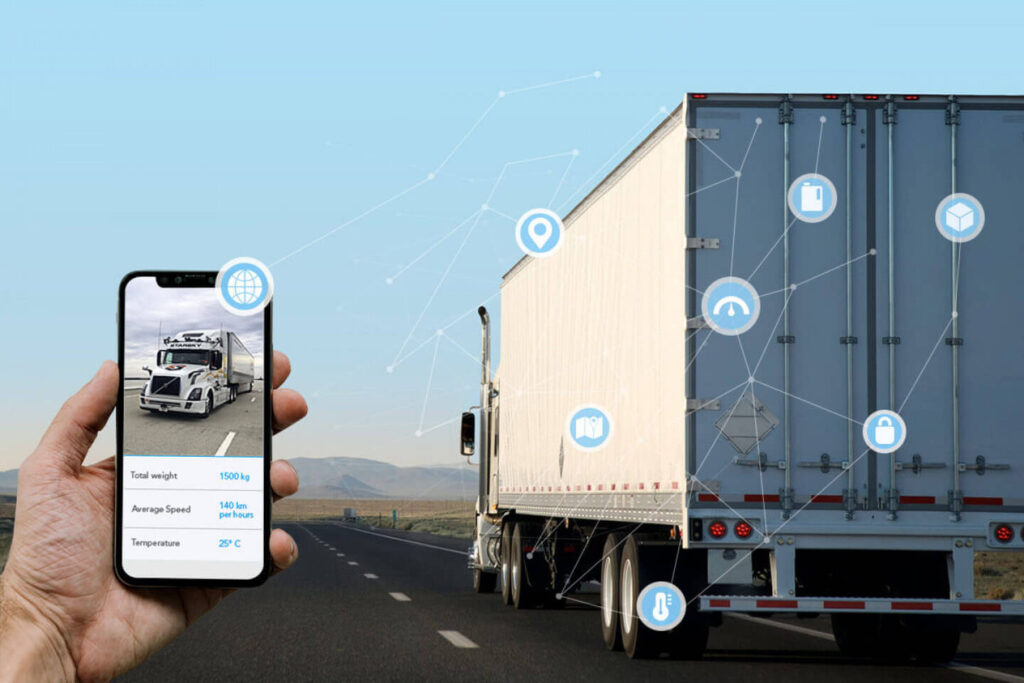
Not long ago, knowing where your cargo was meant calling your freight broker and waiting.
Today, a sensor the size of a matchbox can tell you where your shipment is, what temperature it’s at, whether it’s been dropped, and if the container door has been opened — all in real time.
IoT (Internet of Things) technology is changing how freight moves, how problems get caught, and how businesses make smarter decisions. Here’s what you need to know.
IoT sensors are small devices that collect and send data throughout a shipment’s journey.
Depending on the type, they track:
Together, this data gives shippers visibility that simply wasn’t possible a few years ago.
External resource: IoT Analytics’ State of IoT Report tracks adoption across industries including logistics and supply chain.
Knowing about a problem early is almost always better than finding out at delivery.
Traditional tracking showed you where your shipment was at port check-in points. IoT sensors show you what’s happening between those points — which is where most problems actually occur.
Examples of what early visibility allows:
Without this data, you find out about problems at delivery. With it, you can often prevent them.
BMI Shipping offers real-time cargo tracking across all modes so you always know what’s happening with your shipment.
For temperature-sensitive cargo, IoT sensors are transforming cold chain management.
Continuous temperature logging from manufacturer to port, through ocean transit, through customs, and into domestic delivery provides a complete record of cold chain compliance.
This matters for three reasons:
Damage prevention. Real-time alerts allow action when temperature goes out of range — before spoilage, not after.
Compliance documentation. Many pharmaceutical and food import rules require proof of temperature maintenance throughout transit. IoT logs provide that automatically.
Insurance and claims. When damage does occur, sensor data shows exactly when and where the cold chain broke. That protects shippers in disputes.
BMI’s ocean freight services include reefer container options with monitoring support for temperature-sensitive cargo moving through ports like New Orleans, Houston, and Savannah.
External resource: IATA’s Temperature Control Regulations set the standard for pharmaceutical cold chain compliance in air freight.
Theft is a real risk in international freight. High-value cargo — electronics, machinery, medical equipment — attracts attention at every point in the supply chain.
IoT sensors add a layer of security that container seals alone can’t match.
Door-open sensors alert immediately if a container is accessed outside expected windows. GPS tracking flags route changes that could indicate theft. Light sensors detect tampering that wouldn’t be visible from outside a sealed container.
For FCL shipments of high-value goods, IoT-enabled security monitoring is now standard practice among serious shippers.
IoT sensors don’t just help you manage current shipments. They build a data set that makes every future shipment better.
Over time, sensor data shows:
A good freight partner uses this data to make better routing decisions and carrier selections on your behalf.
IoT sensors generate data. That data is only useful if it flows into systems where it can be acted on.
Modern freight tracking integrates IoT sensor feeds with shipment management platforms, giving shippers one view of location, condition, and status across every leg.
BMI’s documentation services — including bill of lading management and EEI filing — work alongside our tracking capabilities to give you full visibility and full compliance in one place.
External resource: Project44’s supply chain visibility platform is one example of how modern freight visibility technology is being applied globally.
Not every freight provider offers the same technology. Ask these questions:
If your current partner can’t answer clearly, it’s worth reviewing your options.
At BMI Shipping, real-time visibility is part of how we manage every shipment.
From air freight on time-sensitive moves to ocean container forwarding across international lanes, our tracking capabilities give you the information you need before problems become losses.
Request a quote or contact BMI Shipping to learn more about how we protect your cargo from origin to delivery.


