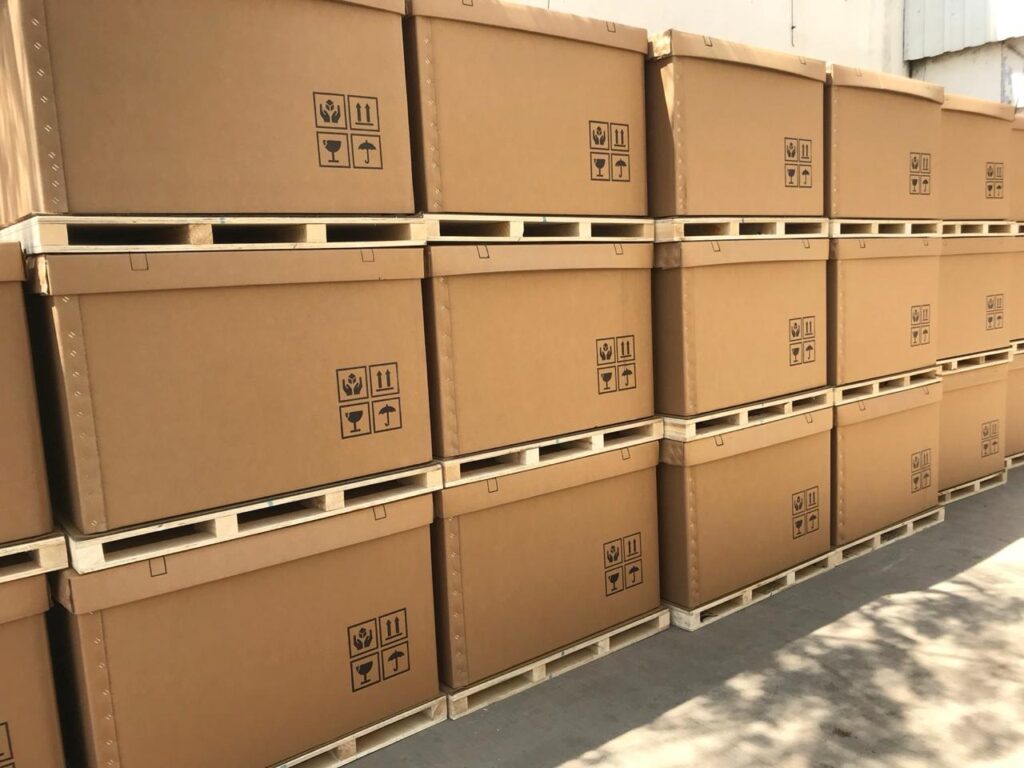
Bad packaging costs more than most shippers realize.
Damaged goods. Rejected shipments. Wasted container space. Extra insurance claims. These are all packaging problems — and they’re preventable.
Smart packaging doesn’t just protect your cargo. It reduces cost, improves transit times, and makes your entire supply chain run smoother.
Here’s what’s changing in freight packaging and why it matters for your bottom line.
Carriers charge based on weight and dimensions. Poor packaging adds unnecessary bulk and weight to every shipment.
A box that’s too large for its contents wastes space inside an LCL shipping container. Multiply that across dozens of cartons and you’re paying for air.
Heavy packaging materials add to gross weight. That affects your cost on every mode — ocean, air, and domestic truck.
Right-sizing your packaging is one of the fastest ways to reduce freight spend without changing anything else about your supply chain.
External resource: The Sustainable Packaging Coalition has practical guides on packaging optimization across industries.
The shift toward lightweight packaging is accelerating across industries.
Traditional wooden crates are being replaced by engineered alternatives that weigh significantly less but offer equal or better protection. Honeycomb cardboard panels, foam-in-place systems, and reinforced corrugated structures now handle loads that previously required heavy timber framing.
For international air shipments, weight savings translate directly into lower freight costs. Air cargo forwarding charges are heavily weight-dependent. Even a 10% reduction in packaging weight adds up fast across high-volume air shipments.
For ocean moves, lighter packaging improves your payload efficiency inside full container load (FCL) and less than container load (LCL) containers.
Inconsistent palletization is one of the most common causes of damage and inefficiency in freight.
Loads that aren’t stable, evenly weighted, or properly stretch-wrapped shift in transit. That causes damage. It also slows down loading and unloading, which creates delays across your supply chain.
Standard pallet sizes — 48×40 inches for North American shipments — fit predictably into domestic trucking solutions and intermodal containers. Non-standard pallet sizes create gaps, reduce container utilization, and sometimes require specialized handling.
Work with your international logistics partner to align your palletization standards with the containers and equipment your freight actually moves in.
External resource: The National Wooden Pallet and Container Association publishes standards for pallet specifications used across North American freight.
Standard packaging is not enough for fragile, high-value, or sensitive cargo.
Medical equipment logistics, electronics, and precision instruments require packaging engineered specifically for the stresses of international freight. Vibration, humidity, temperature swings, and handling impacts during loading and unloading all create risk.
Packaging solutions for these cargo types include:
For project cargo forwarding and machinery transport services, custom packaging and crating is often the difference between cargo arriving intact and a costly insurance claim.
More markets are regulating packaging waste. The European Union has strict rules on packaging materials for imports. Several Asian markets are moving in the same direction.
If your packaging doesn’t meet destination country requirements, your shipment can be held at customs or rejected entirely.
Sustainable packaging — recycled content, reduced plastic, biodegradable materials — is increasingly a requirement, not just a preference.
Your customs clearance services provider should flag destination country packaging regulations before your shipment leaves. If they aren’t doing this, it’s worth asking.
External resource: EUR-Lex Packaging Directive outlines current EU packaging and packaging waste requirements for importers.
Perishable goods logistics adds another layer to packaging decisions.
Insulated packaging, phase-change materials, and dry ice or gel pack configurations all play a role in maintaining temperature integrity when refrigerated transport isn’t available for part of the journey.
For food export shipping and pharmaceutical cargo, packaging must maintain the correct temperature range through customs inspections, port handling, and last-mile delivery — not just while the cargo is inside a reefer unit.
Work with your Gulf Coast freight forwarding or Houston freight forwarding partner to review packaging requirements alongside transport mode selection. The two decisions are connected.
Before your next shipment, ask your freight partner these questions:
A good reliable freight forwarder will flag packaging issues before they become damage claims or compliance problems.
At BMI Shipping, we review packaging as part of our end-to-end logistics solutions planning process.
Whether you’re shipping fragile equipment, perishable cargo, or high-volume consumer goods, we help you match packaging to mode, route, and destination requirements.
Contact BMI Shipping to review your current packaging and find where efficiencies are being left on the table.